
Experiencing persistent toothache, sensitivity to hot and cold foods, or pain while chewing? These symptoms may indicate a dental problem that needs professional attention. In some cases, your dentist may recommend root canal treatment to address infection or inflammation inside a tooth.
Understanding when you need a root canal can help you seek timely dental care and avoid complications. If you are looking for information about root canal treatment in Jamshedpur, this guide explains the common warning signs, how the procedure works, what recovery involves, and when to consult a dentist.
Remember, these symptoms do not automatically mean you need a root canal. A dental examination is necessary to identify the cause and determine the appropriate treatment.
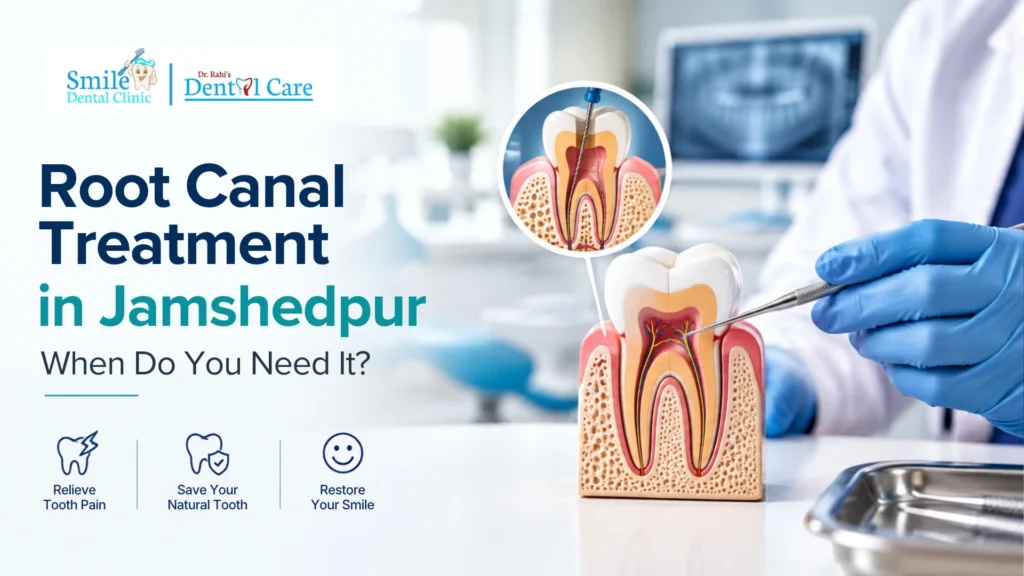
Root canal treatment is a dental procedure used to treat infection or inflammation affecting the soft tissue, called the pulp, inside a tooth. This tissue contains nerves and blood vessels.
Deep tooth decay, a cracked tooth, an injury, or repeated dental procedures can damage the pulp. During treatment, the dentist removes the affected tissue, cleans and disinfects the inside of the tooth, and seals the root canals.
The goal is to treat the problem and preserve the natural tooth whenever possible, rather than removing it.
Recognising possible warning signs can help you decide when to schedule a dental consultation.
1. Persistent or Severe Tooth Pain
Ongoing toothache is one possible sign of a problem affecting the inner part of a tooth. The pain may occur spontaneously, become worse at night, or interfere with eating and sleeping.
Persistent pain can have several causes, so a dentist needs to examine the tooth before recommending treatment.
2. Severe Tooth Pain When Chewing
Pain when biting down or chewing may indicate inflammation around a tooth, a crack, or another dental problem. If the discomfort persists or becomes more severe, arrange a dental examination.
Do not assume that every painful tooth needs a root canal; the appropriate treatment depends on the cause.
3. Sensitivity to Hot and Cold Foods
Temporary sensitivity can occur for several reasons, including exposed dentine, cavities, and gum recession. However, sensitivity to hot and cold that lingers after the food or drink is removed may indicate a problem with the tooth pulp.
If you experience repeated or prolonged sensitivity, consult a dentist for an assessment.
4. Swollen or Tender Gums
Swelling or tenderness near a particular tooth may be associated with infection or inflammation. You might also notice a small pimple-like bump on the gum.
These symptoms should not be ignored. Dental swelling requires professional assessment, particularly if it is increasing or accompanied by significant pain.
5. A Cracked, Chipped, or Deeply Decayed Tooth
A crack, injury, or deep cavity can expose or damage the pulp inside a tooth. Sometimes, pulp damage occurs even when the visible damage appears minor.
A dentist can assess the extent of the damage and determine whether a filling, another restorative treatment, root canal treatment, or a different approach is appropriate.
6. Tooth Discolouration
A tooth that becomes darker than the surrounding teeth may have experienced trauma or changes affecting its internal tissues. Discolouration alone does not confirm an infection or mean that a root canal is necessary.
A dental examination, and sometimes an X-ray, may help identify the underlying cause.
A dentist may recommend root canal treatment when the pulp inside a tooth is irreversibly inflamed, infected, or damaged and the tooth can be preserved.
Common causes include:
Deep tooth decay that reaches the pulp.
A cracked or fractured tooth affecting the inner tissues.
Dental trauma or injury.
Complications following previous dental treatment.
Infection affecting the pulp and surrounding tissues.
The dentist will evaluate your symptoms, examine the tooth, and may take dental X-rays. The final treatment recommendation depends on the clinical findings.
If you have persistent tooth pain or swelling, seek dental care promptly rather than waiting for the symptoms to disappear.
Understanding the root canal treatment procedure can help you feel better prepared for your consultation.
Step 1: Examination and Diagnosis
The dentist examines the affected tooth, discusses your symptoms, and may take an X-ray to assess the tooth roots and surrounding area.
Step 2: Local Anaesthesia
Local anaesthesia is generally used to numb the area so the procedure can be performed comfortably.
Step 3: Removing the Damaged Pulp
The dentist creates an opening in the tooth and removes the infected or damaged pulp tissue.
Step 4: Cleaning and Sealing
The root canals are cleaned, shaped, and disinfected before being filled and sealed to help prevent reinfection.
Step 5: Restoring the Tooth
A filling or dental crown may be needed to restore and protect the tooth, depending on how much natural tooth structure remains.
The exact procedure and number of appointments vary according to the condition and complexity of the tooth.
Many patients worry about root canal treatment pain. Modern root canal treatment is generally performed under local anaesthesia, which helps minimise discomfort during the procedure.
You may experience tenderness or mild discomfort after treatment while the surrounding tissues recover. This usually improves over time.
If you experience severe or increasing pain, persistent swelling, or symptoms that concern you after treatment, contact your dentist for advice.
Patients often ask, “How long does a root canal take?”
Treatment time depends on the tooth involved, the number and shape of its root canals, the extent of infection or damage, and the complexity of the case.
Some treatments can be completed in one appointment, while others require multiple visits. Additional restoration, such as a crown, may also be necessary.
Your dentist can explain the expected treatment schedule after examining your tooth.
Root canal recovery time varies from person to person. Some tenderness or sensitivity may occur for a few days following treatment, but symptoms should generally improve.
To support recovery:
Follow the aftercare instructions provided by your dentist.
Avoid chewing hard foods on the treated tooth until your dentist confirms it is safe.
Maintain regular brushing and interdental cleaning.
Attend recommended follow-up appointments.
Ask your dentist which pain-relief options are suitable for you.
If pain worsens, swelling develops or increases, or you develop a fever, contact a dental professional promptly. Significant facial swelling or difficulty breathing or swallowing requires emergency medical attention.
The choice between root canal treatment and tooth extraction depends on the condition of the tooth and your overall dental needs.
Root canal treatment: When the tooth can be restored, this treatment removes the damaged pulp while preserving the natural tooth structure.
Tooth extraction: If the tooth is too severely damaged to restore, removal may be recommended. Depending on your situation, replacing the missing tooth with an implant, bridge, or another option may be discussed.
Neither option is automatically right for everyone. Your dentist can explain the benefits, limitations, expected costs, and alternatives based on your clinical examination.
The cost of root canal treatment in Jamshedpur can vary depending on several factors, including:
Which tooth requires treatment.
The complexity of the root canal system.
The extent of infection or damage.
Whether additional treatment is needed.
Whether a filling or crown is required after treatment.
An examination is the best way to determine the treatment needed and provide an appropriate estimate. Contact the clinic directly for current pricing rather than relying on a general online figure.
If you are experiencing persistent tooth pain, sensitivity, or other possible signs of a root canal problem, arrange a consultation with a dentist.
Dr. Rahi Dental Care & Smile Dental Clinic serves patients in Jamshedpur, Jharkhand, through its Mango and Parsudih clinic locations.
During a consultation, the dentist can examine your tooth, assess your symptoms, and explain the treatment options appropriate for your condition.
Need dental advice? Visit the Contact page to find the clinic’s available contact and appointment options.
1. How do I know if I need a root canal?
Persistent toothache, lingering sensitivity to hot or cold, pain when chewing, swelling near a tooth, or tooth discolouration may indicate a dental problem. Only a dental examination can determine whether root canal treatment is necessary.
2. What are the early signs of a root canal infection?
Possible signs include persistent sensitivity, toothache, pain when biting, gum tenderness, or swelling. Some dental infections cause few obvious symptoms, so a professional examination is important when a problem is suspected.
3. Can an infected tooth heal without a root canal?
An infected or irreversibly damaged tooth pulp generally needs definitive dental treatment. Depending on the diagnosis, options may include root canal treatment or extraction. A dentist can explain the appropriate options for your tooth.
4. Is root canal treatment painful?
Local anaesthesia is generally used to minimise pain during treatment. Some tenderness may occur afterward, but severe or worsening symptoms should be assessed by your dentist.
5. How many appointments are needed for a root canal?
Some root canals can be completed in one appointment, while others need two or more visits. The number depends on the tooth, the complexity of the treatment, and the clinical findings.
6. How long does recovery take after a root canal?
Mild tenderness may last a few days and should generally improve. Recovery varies, and you should contact your dentist if symptoms worsen or do not improve as expected.
7. What is the cost of root canal treatment in Jamshedpur?
The cost depends on the tooth, treatment complexity, and any additional restoration required. Contact the clinic for a current estimate after an appropriate assessment.
Persistent tooth pain, lingering sensitivity to hot and cold, discomfort while chewing, or swelling near a tooth can be signs that you need dental attention. Although these symptoms do not always mean you require a root canal, an early assessment can help identify the problem and guide treatment.
If you are concerned about possible root canal symptoms, arrange a consultation with a dentist in Jamshedpur to understand your options and protect your oral health.
Contact Dr. Rahi Dental Care & Smile Dental Clinic to enquire about a dental consultation.
Step into a world of excellence and compassionate care at Dr. Rahi Dental Care & Smile Dental Clinic, where your smile is our priority!
Copyright © 2025 Dr Rahi Dental Care. All Rights Reserved